
Terrazzo Floor Waxing in a New Office Build-Out: Before and After
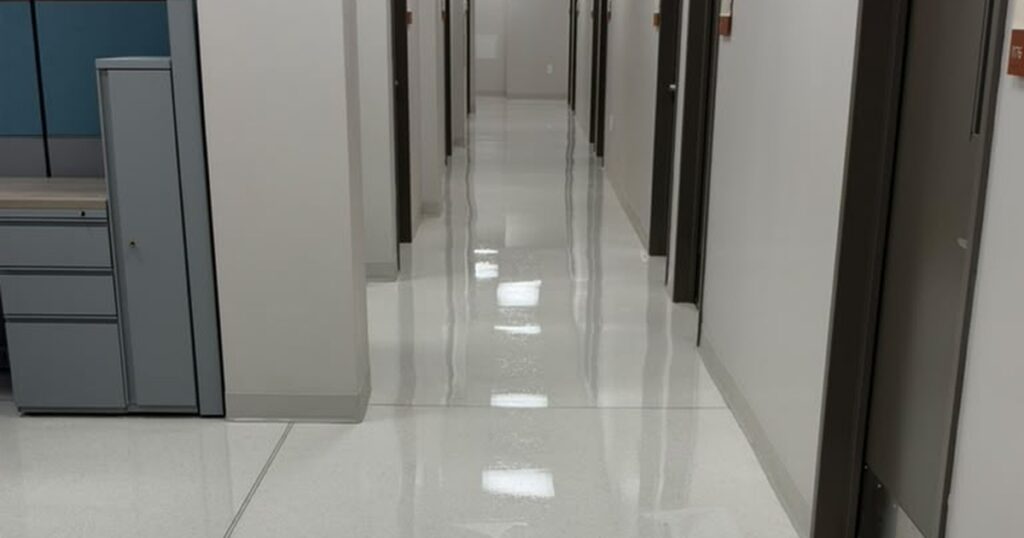
New terrazzo looks flat and chalky until it is protected. On a recent office build-out, the Clean2Clean crew applied high-gloss floor finish across the corridors, the open workstation area and the utility rooms, so the space could be handed over clean, protected and ready for move-in. The photos below show the floor before, during and after.
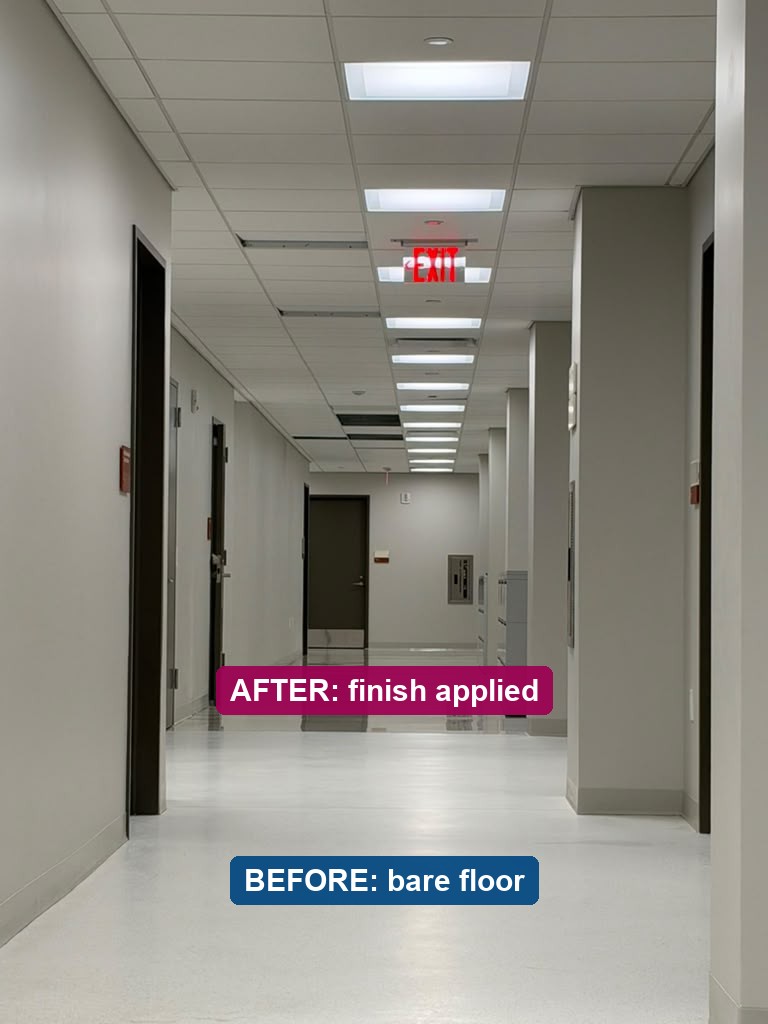
The starting point: a clean but unprotected floor
Floor finish locks in whatever is underneath it. Any construction dust or grit left on the surface ends up sealed under the gloss, where it shows every time the lights hit it. That is why finish work begins where post-construction cleaning ends: the floor has to be swept, dust mopped, damp cleaned and completely dry before the first coat goes down.
In the photo above you can see the difference along a single corridor. The finished section mirrors the ceiling lights and the door at the far end. The bare section is clean, but it has no shine and nothing protecting it from scuffs and soil.
How the finish goes down
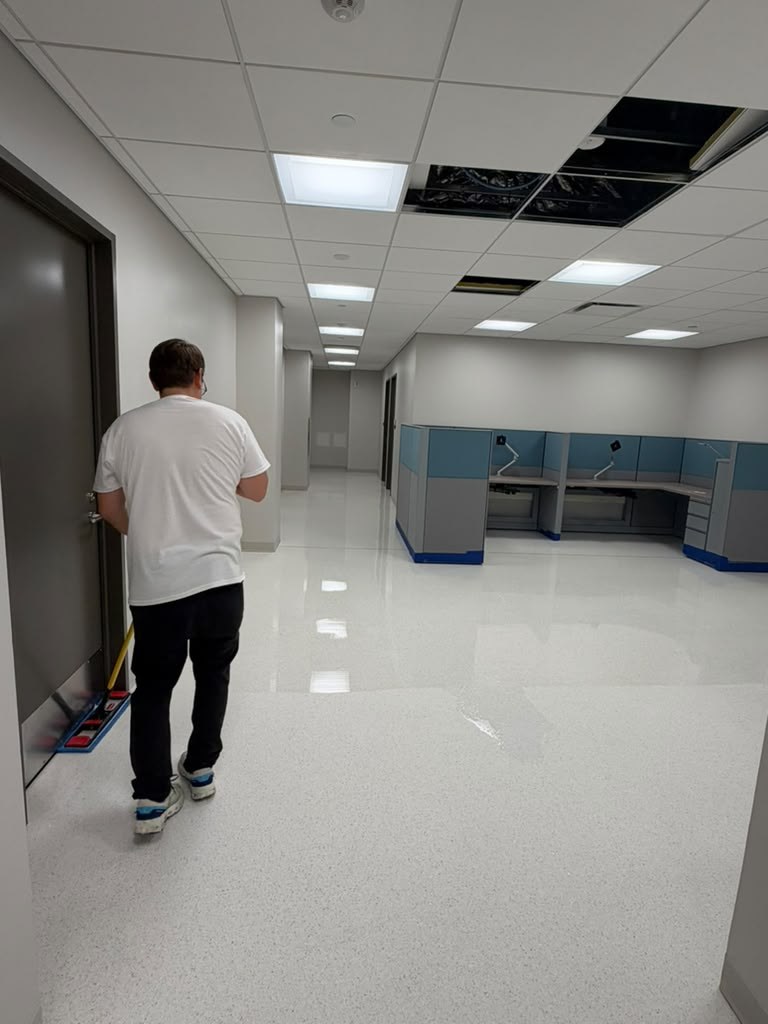
The crew used a flat microfiber applicator on a pole instead of a string mop. Finish is poured onto the floor in a small pool, then spread in thin, even, overlapping passes. The edges come first: along the baseboards and around each door frame. The open floor is filled in afterward, working backward toward the exit so nobody has to step on wet finish.
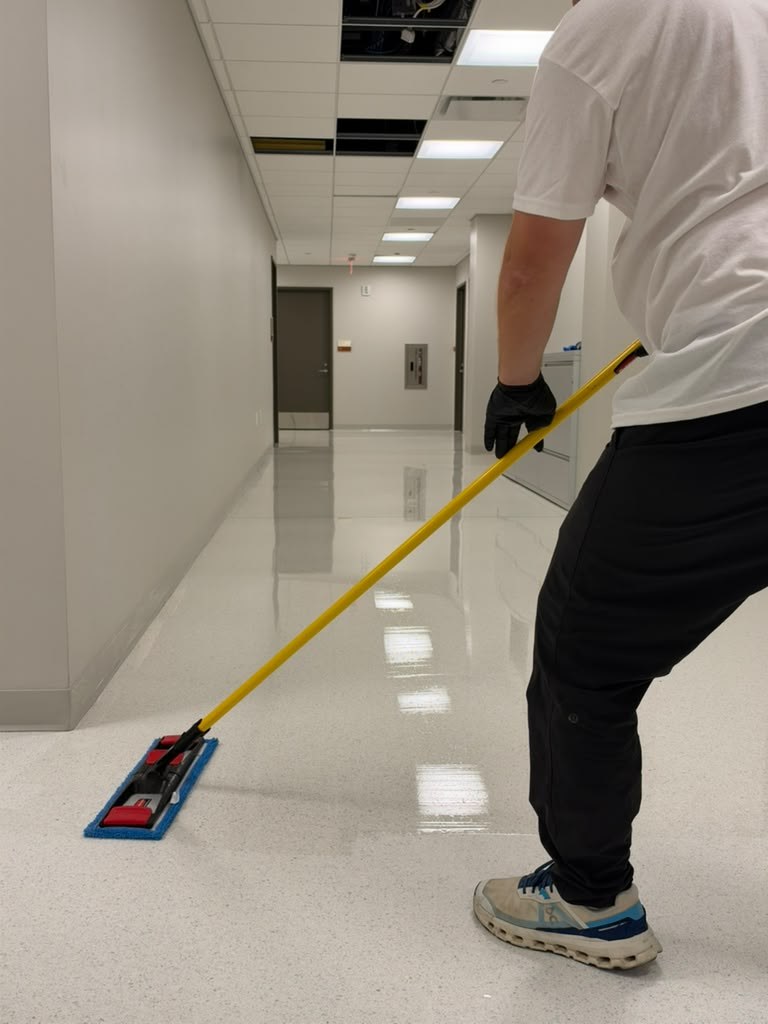
Thin coats matter more than most people expect:
- They level out. A thin coat settles into a smooth film. A heavy coat can dry with ridges, streaks and cloudy patches.
- They dry evenly. Each coat has to dry before the next one goes on. Thin coats get there sooner and more predictably.
- They build a harder surface. Several thin coats wear better than one thick one.
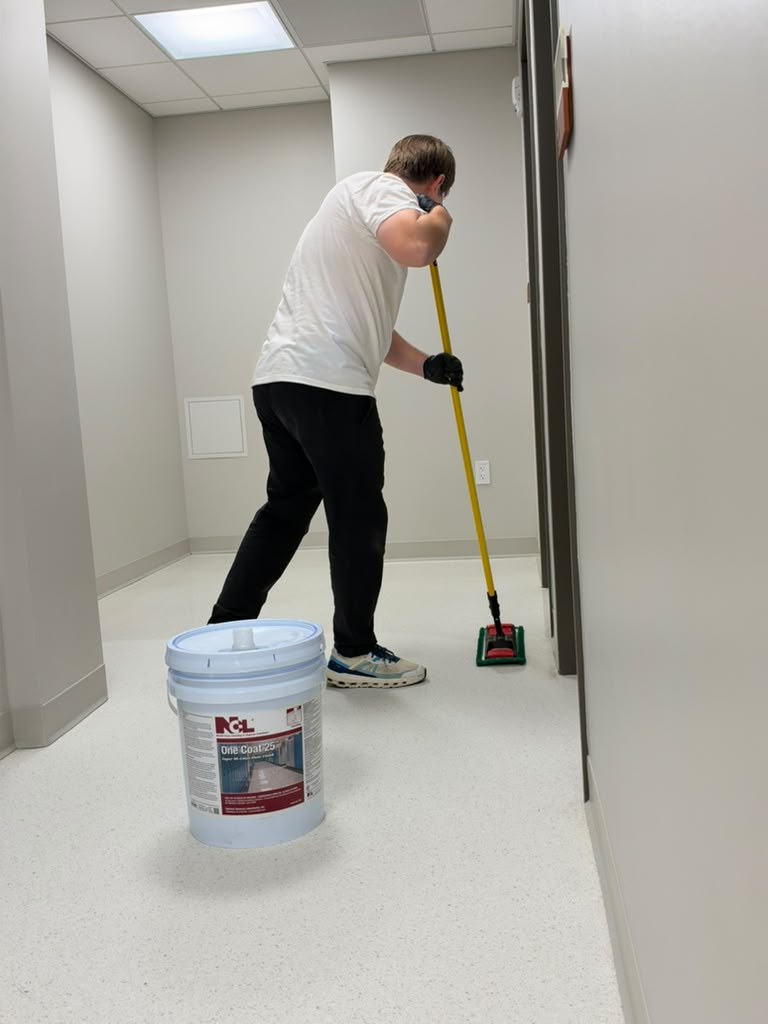
Every room, not only the main corridor
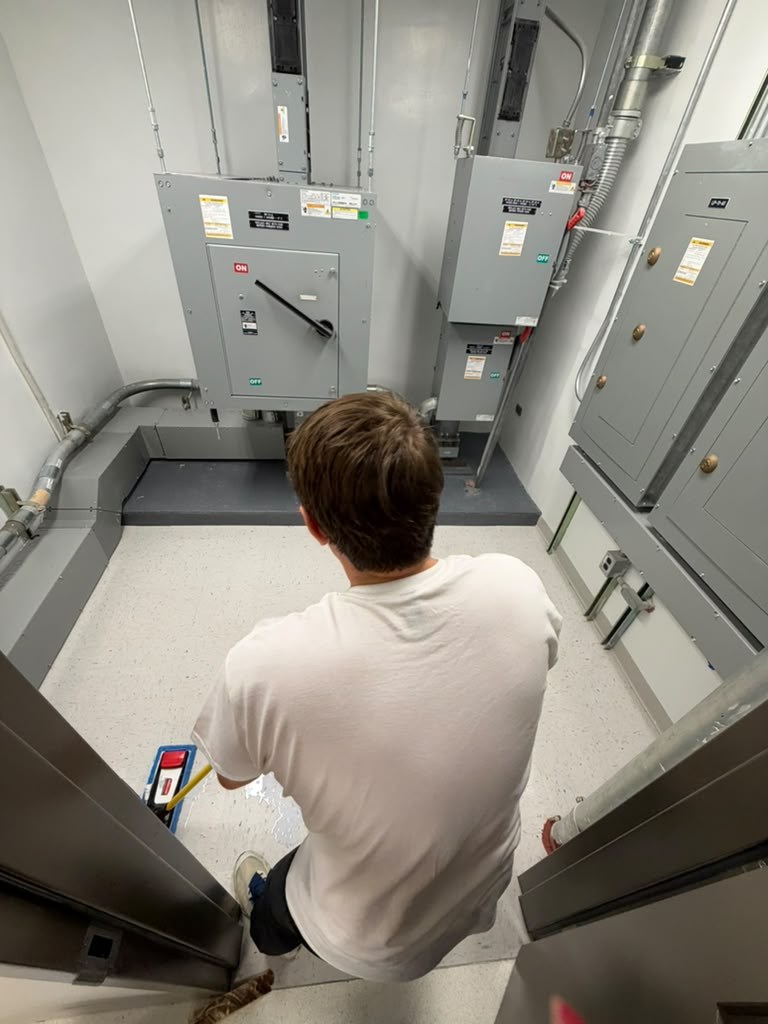
The corridors are what visitors see first, but the same finish went down in the open office area, around workstations that were already installed, and in the utility rooms. Back-of-house floors take real abuse from carts, tools and maintenance traffic, so they need the same protection as the front of the house.
The result
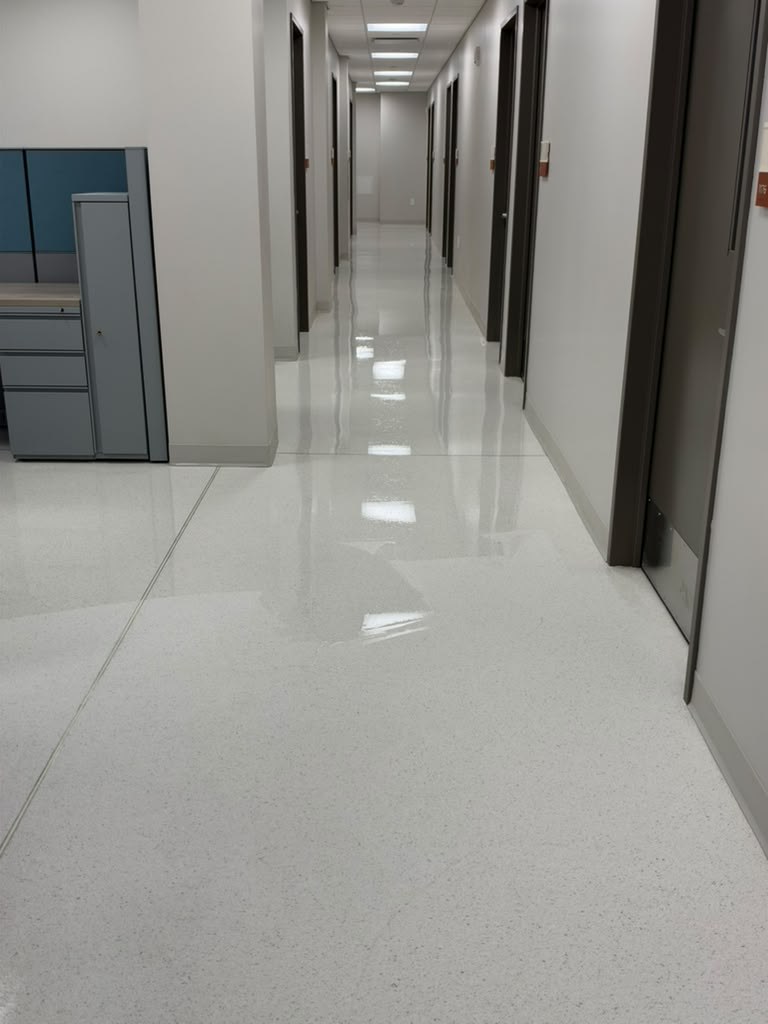
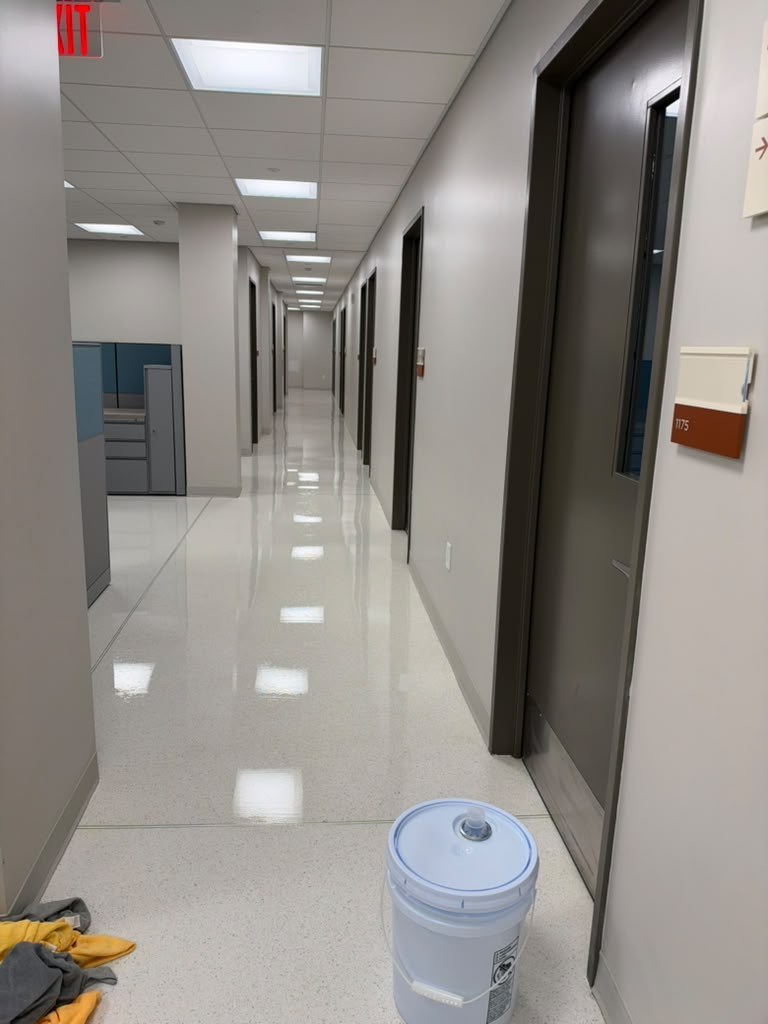
The finished floor reflects the ceiling lights from one end of the corridor to the other. More important than the shine is what it does: the finish takes the scuffs, grit and spills so the terrazzo underneath does not, and daily dust mopping and damp mopping go faster on a sealed, smooth surface.
What project and facility managers should plan for
- Put floor finish at the end of the schedule. Finish should go down after dusty work is complete and the final clean is done, so nothing gets trapped under it.
- Allow for drying time. Each coat needs to dry before the next, and the floor needs time before furniture and heavy traffic return. Temperature, humidity and airflow all change how long that takes.
- Keep the floor closed while it dries. Footprints in wet finish mean rework. After-hours or weekend scheduling makes this much easier.
- Set up maintenance from day one. Dust mopping, damp mopping with a neutral cleaner and periodic buffing or recoating keep the shine up and delay the next full strip and refinish.
Need floors finished before turnover?
Clean2Clean handles floor stripping and waxing in NYC for new build-outs and occupied buildings, along with routine commercial floor cleaning. Get a preliminary price with the instant estimate calculator, request a walkthrough, or call (646) 639-7892.